

Sell Gold Doré — Assay-Based Purchase

Why Valuation Happens After the Melt
Doré is non-uniform, so the gold figure can only be fixed after the bar is melted and a sample is assayed — not from any figure stated beforehand.
Doré Is Not Uniform
Metals distribute unevenly through a cast doré bar, and gold content shifts with the feed material and the melting practice at origin — two bars from the same producer can assay differently. The actual gold content is a property of the whole bar, not of any single point on it.
A Fire Assay Needs a Uniform Melt
Fire assay is the international reference method for gold content, but it measures a sample — and a sample represents the lot only when it comes from a uniform melt. The controlled re-melt exists for this reason: it homogenizes the batch so the sample carries the composition of the whole lot, and the assay report issued on it can stand behind the price.
Melt First, Assay Second, Price Last
Hence the sequence. A weight or fineness stated before the melt is planning information; the settlement figure exists only on the assay report, drawn from the homogenized lot.
Refined and Assayed by Heraeus Precious Metals

Doré is refined and assayed by Heraeus Precious Metals — the gold weight behind every settlement comes from a Heraeus assay report. Heraeus is one of the world’s largest precious-metals refiners: founded in Hanau, Germany in 1851, privately held, around 12,500 people across the group, with LBMA Good Delivery operations in Germany, Switzerland and Hong Kong. The group’s Swiss refinery, Argor-Heraeus, sits on the LBMA Good Delivery referee panel.
The seller carries no exposure on either side of the deal. Payment is guaranteed by the documentary letter of credit, issued by a major international bank before the material moves — the funds sit behind a bank’s commitment, not a promise from Golden Ark Reserve. The gold figure is guaranteed by the assay report: Heraeus, an LBMA Good Delivery producer, puts its own name behind the accuracy of the result. Payment is that certified gold weight at the agreed price — a figure the seller can recompute line by line from the report.
Transaction File and Compliance Gating
The Transaction File
Five documents close the transaction:
- the purchase agreement
- the melt and sampling report
- the assay report
- the settlement confirmation
- the compliance record
Each one references the identifiers opened at intake, so the file reads as a single chain — from the sealed batch through the assay result to the released payment.
For the seller the file does real work: it answers a bank’s questions about an incoming payment from a gold sale, and any later query about the transaction resolves against it. The company profile publishes the contracting entity’s registrations and identifiers.
Compliance Gating
Compliance gating finishes in full before any intake is booked. Verification covers:
- the seller’s identity, with beneficial ownership where the seller is a company
- the origin and supply-chain history of the material
- sanctions, PEP and adverse-media screening — OFAC, EU, UK, UN — via Refinitiv World-Check
- conflict-affected and high-risk area (CAHRA) indicators
This counterparty due diligence runs under Golden Ark Reserve’s Responsible Precious Metals Supply Chain Policy, aligned with the OECD Due Diligence Guidance for Responsible Supply Chains of Minerals, the LBMA Responsible Gold Guidance, and the RJC Code of Practices behind Golden Ark Reserve’s Responsible Jewellery Council membership.
With checks complete in advance, every batch that travels can settle, and the timeline fixed at booking stands. Compliance & Legal documents the broader framework — AML and KYC controls, licensing, risk management.
What Gold Doré Is
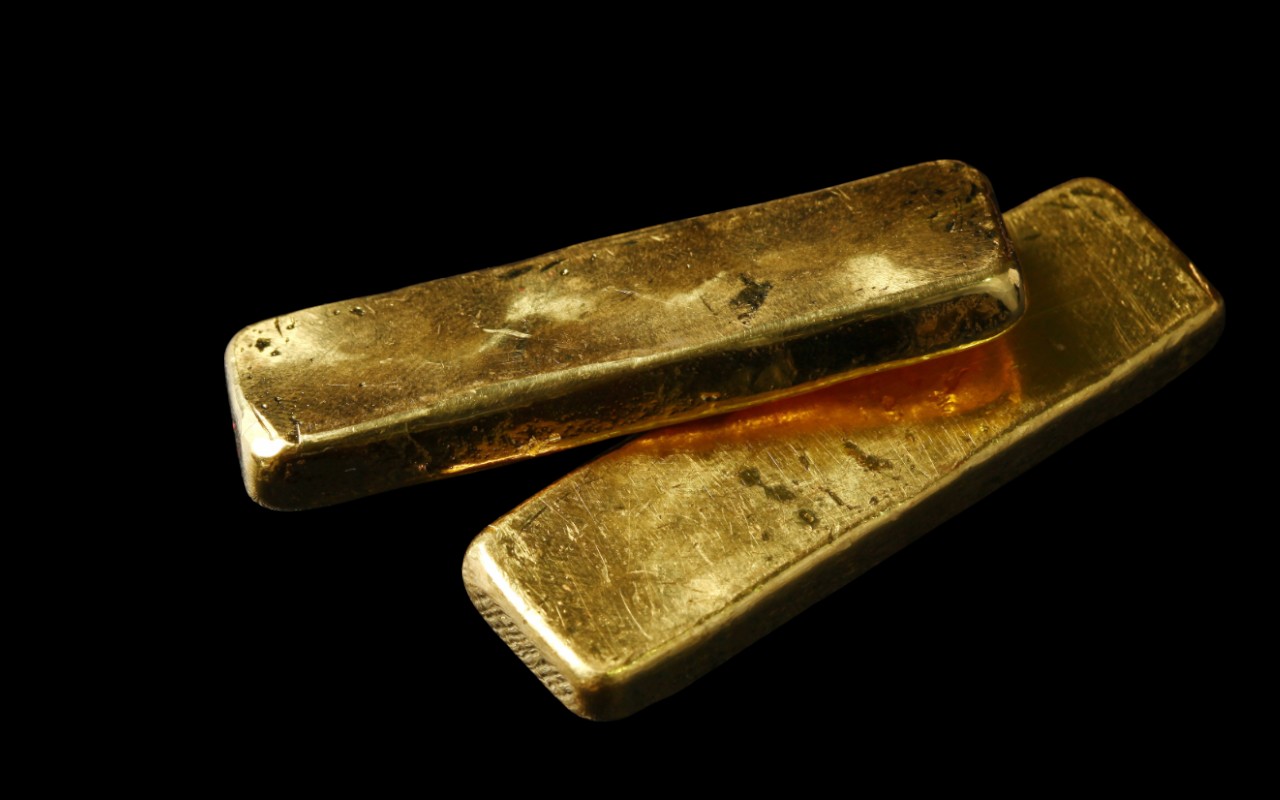
Gold doré is a semi-refined alloy produced from mined material or recycled gold, typically containing 70–90% gold with varying levels of silver and base-metal impurities. Doré requires melting and independent fire-assay verification to determine its actual purity and value. It is not an investment bar but a raw material that must be refined before institutional trading or settlement.
The Doré Purchase Process
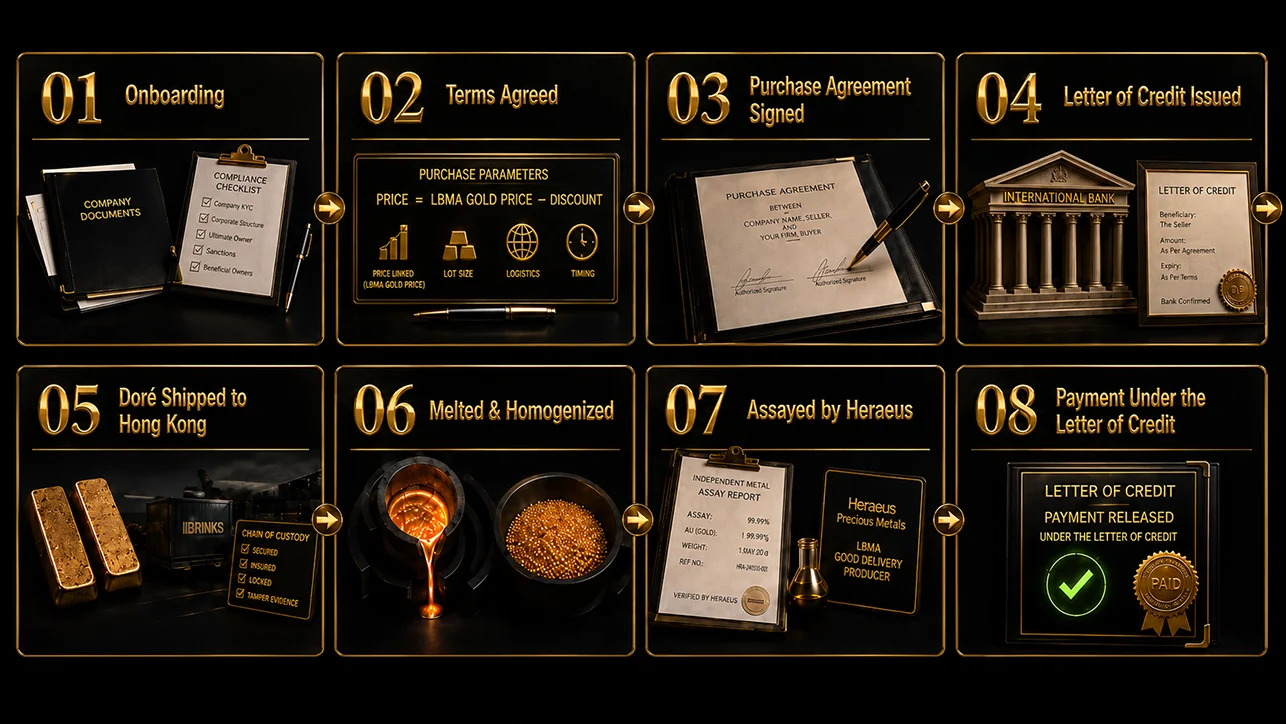
How a Doré Purchase Works
From intake to payment, every step is documented — and the figure the seller is paid on comes from an independent Heraeus assay, not from Golden Ark Reserve.
-
01
Onboarding
The seller makes contact and submits the lot details and company documents. Compliance screening is completed before the transaction is booked.
-
02
Terms Agreed
The purchase parameters are set: the discount to the LBMA Gold Price — the single commercial variable — together with lot size, logistics and timing.
-
03
Purchase Agreement Signed
The agreed terms are fixed in a purchase agreement between Golden Ark Reserve and the seller.
-
04
Letter of Credit Issued
A documentary letter of credit is opened through a major international bank in the seller’s favour, before the material moves. The bank’s payment commitment is in place first.
-
05
Doré Shipped to Hong Kong
The seller ships the lot to Hong Kong against the letter of credit already in place. Brink’s takes receipt on arrival and moves it to the refinery under a documented chain of custody.
-
06
Melted & Homogenized
The bar is melted and granulated, turning a non-uniform cast into homogeneous metal so a sample drawn from it carries the composition of the whole lot.
-
07
Assayed by Heraeus
Heraeus issues the assay report, stating the certified gold content of the lot. As an LBMA Good Delivery producer, Heraeus puts its own name behind the accuracy of the result.
-
08
Payment Under the Letter of Credit
The certified gold weight, at the agreed price, sets the amount — paid to the seller under the letter of credit already in place.
What We Purchase: Acceptance Criteria
Until a lot has been through the melt, every figure attached to it is provisional — the post-melt fire assay decides both acceptance and price. Four criteria define the standard purchase model:
Settlement


Start the Onboarding Process
To start working with us, email Golden Ark Reserve with the details of your lot. Pricing is set by the independent Heraeus assay, so an enquiry only moves forward once there is a real, documented lot behind it. Lots start at 20 kg. To begin, send the following:
-
01
Bar Photos and Smelting Video
A clear photograph of the doré bar and a video of the smelting process.
-
02
Existing Assay or Test
Any existing chemical or assay test of the doré.
-
03
Lot Weight
Total weight of the lot.
-
04
Mine and Licence
The mine name, country and mine licence.
-
05
Company Registration
Company name, country of incorporation and business registration document.
-
06
Contact Person
Name and contact details of the person handling the sale.
-
Please prepare and email the requested information to onboarding@goldenarkreserve.com
Send e-mail for review