Singapore Gold Market: How a City-State Built a Gold Hub

Demand for physical gold has shifted toward Asia; the infrastructure that prices, clears, and settles it has not. Most over-the-counter gold still settles loco London — in London, on London’s business days — even when both counterparties sit in Asia. Singapore is the most deliberate attempt to close that gap. A city-state with no gold mines of its own removed its sales tax on investment-grade bullion and let vault capacity follow; a regulatory frame came next, and the current step is a system to clear gold stored on its own ground, loco Singapore, during Asian hours. Where gold sits decides which legal system protects the bars, how the holding is taxed, and when metal can be dealt or released — which makes one country’s project to become a place where gold lives relevant to anyone who owns the metal or follows it, from a private holder of a single kilobar to a reserve manager. This page traces how the market was built and how investors read it today, then weighs the new program against its own timetable.
The Market Today: Scope and Institutions
Measured by what actually moves, the Singapore gold market is a market of flows: metal imported, vaulted, financed, traded over the counter, and re-exported through the city. Three activities make up the working definition. Bank desks and registered dealers transact spot and forward against global reference prices; commercial and bank vaults hold allocated bars, with capacity across Singapore’s providers exceeding 2,000 tonnes; and a settlement layer is now under construction — clearing for gold that physically sits in the city, so that a trade agreed in Asian hours can also settle in them.
Four institutions set the rules, and each controls a different failure point. The Monetary Authority of Singapore (MAS) — central bank and financial regulator — drives market development and leads the gold market build-out jointly with the Singapore Bullion Market Association (SBMA), the industry body that connects refiners, banks, dealers, and vault operators. The Singapore Exchange (SGX) is building the over-the-counter clearing system and signs its clearing members. The Inland Revenue Authority of Singapore (IRAS) draws the tax perimeter: its Investment Precious Metals definition decides which bars cross the border and change hands free of GST. The Ministry of Law registers precious metals dealers under the Precious Stones and Precious Metals (Prevention of Money Laundering and Terrorism Financing) Act — so a dealer’s regulated status in Singapore is a matter of public record that anyone can check.
Beneath these institutions sits the operator layer — which firms run the vaults, transport, and secured logistics. That tier is a subject of its own; the entities and facilities are covered in Singapore Gold Storage: SBMA, Le Freeport, Malca-Amit, Brink’s.
The boundaries matter as much as the contents. Singapore mines no metal and does not yet set a global reference price: gold vaulted there is quoted against international benchmarks, and the clearing program is an attempt to add settlement — and only later, possibly, price formation — in Asian hours. The city’s sizeable gold jewellery trade sits outside this market’s perimeter entirely: jewellery remains taxed and excluded from the investment-metal definition, whatever its purity.
The Founding Decision: GST Exemption for Investment Precious Metals (2012)
Until 1 October 2012, Singapore taxed bullion like any other good. GST at the then-rate of 7% fell on non-registered buyers of gold unless a supply qualified for zero-rating under export rules — a structure that discouraged building gold vaults outside zero-GST bonded warehouses. Investment metal could transit Singapore; it had a tax reason not to live there.
The 2012 Budget left the rate alone and changed the classification. From 1 October 2012, the import and supply of investment-grade precious metals became exempt supplies, on the stated logic that such metals are in substance actively traded financial assets, aligned with the GST treatment of stocks and bonds. The exemption’s edge is precise, and IRAS polices it by written definition alone. A bar, ingot, or wafer qualifies as an Investment Precious Metal when it meets all of the following:
- gold of at least 99.5% purity, silver of at least 99.9%, or platinum of at least 99%;
- refined by a refiner on the current or former Good Delivery list of the LBMA (gold, silver) or LPPM (platinum), and bearing a mark internationally accepted as guaranteeing quality;
- priced off the spot value of the metal it contains, together with a defined list of qualifying coins.
Everything outside the definition stays taxable: jewellery of any fineness, collectors’ coins, scrap metal sent for refining, and bars from refiners absent from the Good Delivery lists. Decorative and collector pieces fail on principle: their premiums price rarity and aesthetics on top of the metal itself. The consequence shows at the border: a kilobar from an accredited refiner enters exempt, while a 999.9 collector coin can still fail on its numismatic premium. The rail extends down to a single traveller — hand-carried investment metal attracts no GST, with a relief permit required above 0.5 kilograms.
The ambition behind the measure was stated in numbers. At the time, roughly 2% of world gold demand flowed through Singapore; the government’s aim was 10–15% within five to ten years, and the finance minister framed the move as developing gold trading on the city’s existing strengths as a financial and trading hub, against strong Asian demand for investment-grade metal. The measure worked as a subtraction: it stripped out the tax reason to keep investment metal offshore or locked in bonded storage, and it created no buying on its own. From that point the binding constraints were capacity and regulation.
The Physical and Regulatory Build-Out
The vault came before the tax change. Singapore Freeport — later Le Freeport — opened in 2010 beside Changi Airport: some 30,000 square metres of maximum-security storage inside a free-trade zone. Government-backed and conceived first for fine art, it was soon carrying bullion as well, and bank-run vaults followed inside the zone, with Deutsche Bank and JPMorgan among the operators and reported capacity running to 200 tonnes of gold. Under the pre-2012 tax structure this was where investment metal had to sit: bonded space kept bars out of GST’s reach, and vaulting outside it carried a tax penalty. The exemption dissolved that constraint — qualifying metal could be held and traded anywhere in Singapore on equal tax terms — and vault construction stopped tracking the boundaries of the free zone.
In 2019 the regulation caught up. The Precious Stones and Precious Metals (Prevention of Money Laundering and Terrorism Financing) Act placed dealers under a registration duty with the Ministry of Law, with customer due diligence, record-keeping, and suspicious-transaction reporting obligations attached. The consequence runs in two directions: a buyer can verify a Singapore dealer’s regulated status in a public register before funds move, and the hub’s growth since has happened inside an anti-money-laundering perimeter — which is what lets a bank or an auditor treat Singapore-vaulted metal as ordinary, documentable property.
Then, in 2024, came the largest single addition. The Reserve, opened by the bullion dealer Silver Bullion a few kilometres from the airport, stacks six storeys and 180,000 square feet of vault space; its floors hold private chambers and more than 12,000 safe deposit boxes, and its design capacity is framed at close to 500 million troy ounces of silver and gold — billed as potentially the largest private vault capacity anywhere, much of it deliberately built for demand that had not yet arrived. The founding decision kept compounding in the background: as Singapore’s headline GST rate climbed to 9%, every point added to the general rate widened the gap between taxed goods and exempt investment metal.
The sum is a figure and a posture. Against London — which needed two centuries to build the infrastructure of the world’s gold market — the SBMA’s chief executive has said Singapore still has work to do and expects to need far less time. The measurable part is simpler: across the city’s vault providers, storage capacity stands above 2,000 tonnes of gold.
How Investors Read Singapore: Rating, Stability, and Demand Evidence
When gold holders weigh the jurisdiction, they are weighing things that can be checked — and the checking starts with the sovereign itself. S&P, Moody’s, and Fitch all rate Singapore at their highest grade: one of roughly ten sovereigns worldwide holding the top rating from all three agencies, a group the United States no longer belongs to at any of them. For vaulted metal the rating is concrete. It grades the solvency and stability of the state whose courts would adjudicate title to the bars, whose police guard the buildings, and whose politics decide whether property rules hold under stress. The fiscal read is equally short: no GST inside the investment-metal definition, and no capital gains tax on disposal.
“Geneva of the East” is how the head of metals strategy at MKS PAMP has described Singapore — a jurisdiction read as politically and economically stable enough to leave metal in. Geography reinforces the reading: Changi’s connectivity makes the city a natural transit point, and bullion follows the same logic as freight — where transit concentrates, vaults follow, because bars arrive and leave on scheduled commercial capacity. Coverage of the 2025 inflows credited Singapore with outpacing older storage centres on ease of access, integrated banking, and lighter paperwork.
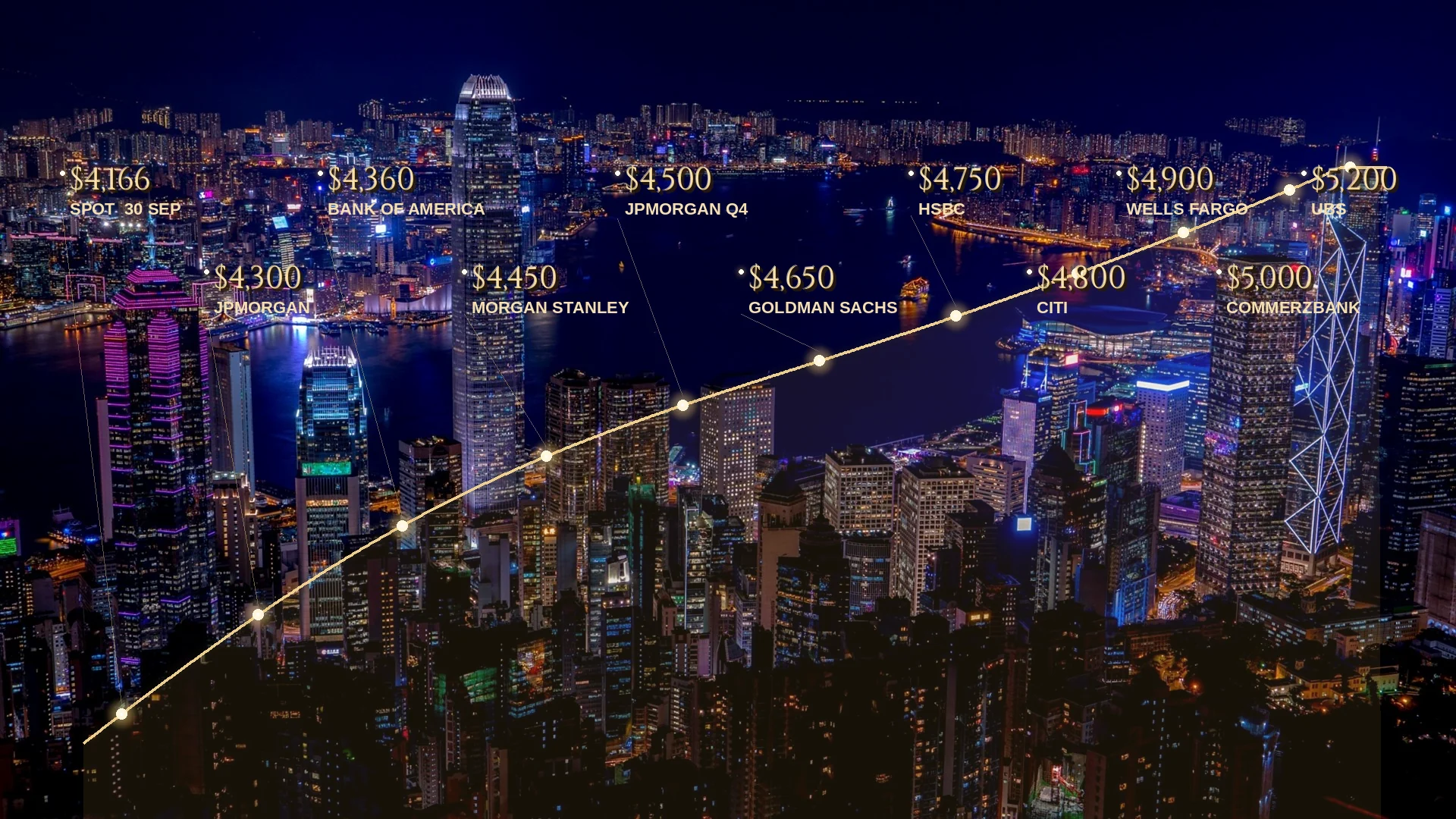
Through 2025, perception became measurable as arriving metal. The Reserve reported an 88% year-on-year rise in storage orders between January and April and a 200% jump in bar sales, with nine in ten new clients coming from outside Singapore, according to its founder. The World Gold Council put Singapore’s investment gold demand in the second quarter at 2.2 tonnes, up 36% year on year — the second-fastest growth in Southeast Asia. The backdrop was gold’s record run, the metal crossing US$4,000 an ounce for the first time that October.
Metal now lives in Singapore at scale; the trades against it still largely settle elsewhere, on other markets’ clocks. That is the profile of a bullion centre with its vault half built and its clearing half still in London.
The Loco Singapore Program
The program is the state’s answer to the gap the inflows exposed: metal accumulating in Singapore’s vaults while the trades against it settle loco London. The term of art carries the design. In bullion markets, “loco” names the place where a trade settles and the metal is delivered; loco Singapore means gold physically stored in the city serving as the settlement base for the trade itself, so that a position vaulted in Singapore no longer needs a London leg to change hands.
The build has run in disciplined stages. MAS and the SBMA convened a Gold Market Development Working Group in January 2026, on the back of industry studies through 2025. In March the group published its focus areas: gold-linked capital-market products, internationally aligned vaulting and logistics standards, and a clearing system for over-the-counter settlement of large bars and kilobars. In June, at the Asia-Pacific Precious Metals Conference, the deputy prime minister and MAS chairman announced the concrete commitments that follow. The stated posture is deliberately modest: the established centres of trading and liquidity keep their role, and Singapore positions itself as “a trusted node in the global gold ecosystem”, connecting regional demand to global liquidity across the Asian trading day — an acknowledgement that demand’s centre of gravity has moved toward Asia faster than the market’s infrastructure.
The SGX Over-the-Counter Clearing System
Today an over-the-counter gold trade settles bilaterally: each pair of counterparties carries the other’s settlement risk, and each new participant must build that web of exposures line by line. The system SGX is committed to establish by the end of 2026 replaces the web with a hub — trades clear through a central platform, with standardized risk-management rails for the physical bars behind them. Six bullion banks have signed on as clearing members: JPMorgan, Deutsche Bank, ICBC Standard Bank, and all three of Singapore’s domestic majors — DBS, OCBC, and UOB. The list is itself information: the two global bullion banks on it already vault metal in the city, and the entire local banking core committed before the platform exists — ICBC Standard, bridging Chinese and African bullion flows, completes the six.
Two formats are specified as deliverable: the ~400-ounce large bar in which wholesale gold moves between banks, and the kilobar in which Asia actually trades physical metal. The choice does quiet work. London’s clearing model, examined in How Bullion Banks Clear Gold: LBMA, Loco London, and the Physical Settlement Layer, standardized on the large bar; clearing the kilobar as a first-class deliverable aligns settlement with the region’s working format, and a bar vaulted in Singapore settles with no conversion into the wholesale 400-ounce unit along the way. The vaulting-standards work in the March focus areas is the same design seen from below: cleared delivery is only as trustworthy as the custody chain behind the bar, so the standards and the clearing system ship together.
On the announced schedule, the mechanism operates by the end of 2026, with inter-bank trading expected to build from 2027. A clearing system is worth the liquidity that runs through it, and the liquidity carries the later of the two dates.
Central-Bank Vaulting at MAS
By October 2026, MAS intends to offer gold vaulting services to foreign central banks and sovereign entities — the second commitment, and the one that extends the hub to official money. The service would make Singapore the first country in Asia to provide official-sector gold custody of this kind, alongside the commercial vaults that serve banks and private holders. For a reserve manager, the option changes the map: official gold storage has historically concentrated in a handful of Western institutions, and an Asian storage point under a AAA sovereign adds a diversification axis that did not previously exist in the region.
The design goes beyond static storage. MAS plans to extend gold accounts to a select group of Singapore-based bullion banks, so that official holders keeping metal in the city can be served with gold-related services and liquidity against their holdings — the metal stays in active use even while the bars stay in the vault. For the wider market the consequence is depth: official metal vaulted loco Singapore enlarges the physical base on which the clearing system’s trading can eventually draw.
Fund-Cap Removal and Products Under Review
The demand-side measure is the least visible and the most structural. Singapore’s tax-incentive schemes for funds — the frameworks under which much of the city’s fund and family-office capital operates — had capped physical precious metals at 5% of a qualifying portfolio; above the line, tax status was at risk. MAS is removing the cap. The change converts vaulted gold from a constrained edge-case into an asset such vehicles can hold at whatever weight their mandate supports, without tax-status arithmetic deciding the allocation — a standing, rule-based channel of demand for metal stored in the jurisdiction, distinct from the episodic inflows that headlines track.
SGX, meanwhile, still has a physically deliverable gold futures contract under review: exchange-traded price discovery against loco Singapore metal, the step from settling gold in Asian hours toward pricing it there. DBS is extending the ecosystem toward retail. Its announced product is tokenised physical gold for banking customers, each token backed by one gram of vaulted metal. The program carries neither as a load-bearing part; the two products mark its reach, from the reserve account to the single gram.
Open Questions: Liquidity and the Hong Kong Parallel
Infrastructure is the part a state can schedule; liquidity is the part it cannot. The clearing mechanism carries a committed date, but inter-bank trading is expected to build only from the following year — and until volume runs through the platform, loco Singapore is a settlement capability with no market behind it yet. The pricing question compounds it. Gold vaulted in Singapore is still quoted off benchmarks formed elsewhere, and the deliverable futures contract that could anchor local price discovery is still only under review. The sequence so far has delivered metal and machinery; volume is the one layer no announcement can deliver.
In the background sits a ledger that is sometimes read against the hub: the city-state’s own reserve. MAS bought 26.3 tonnes of gold in 2021 and 76.3 tonnes in 2023, then turned net seller — 10.1 tonnes in 2024, another 26.5 tonnes across 2025. In May 2026 it returned to purchases with 4 tonnes, taking official holdings to roughly 197 tonnes. Reading the sales as a verdict on the hub misreads both activities. Reserve management runs on portfolio logic — composition, valuation, rebalancing — while market development runs on infrastructure logic; one institution can pursue both at once. The demand backdrop for the official-vaulting service sits in survey data instead: in the World Gold Council’s 2026 central-bank survey, 89% of reserve managers expected global gold reserves to rise over the following twelve months, and a record 45% expected their own institution’s to.
Nor is the build happening in isolation. Hong Kong is running a parallel construction: its existing physical market — the exchange, vault, and depository infrastructure mapped in Hong Kong Gold Market: CGSE, Brink’s, Malca-Amit, HKIA Depository — is gaining its own precious-metals central clearing system, expected to enter trial operation over the same period. Both cities are adding vault capacity and gold products while deepening links to mainland Chinese demand. One membership detail complicates any rivalry reading: JPMorgan has signed into both systems, and a bank that commits to two hubs is buying exposure to the region as a whole — to Asia’s share of settlement, wherever it lands between two cities an ocean apart from the incumbent.
Outside every program sits one variable: price. The vaulting surge ran alongside a historic advance — gold’s first close above US$4,000 an ounce, then a record near US$5,600, then a sharp correction off the peak. The program’s institutional pieces — clearing, official custody, fund rules — are built to function across price cycles. The inflows themselves are younger than one full cycle: they arrived with the run-up, and the correction that followed is the first downturn they have had to hold through.
What the Jurisdiction’s Structure Means for Physical Gold Holders
Set the narrative aside and the jurisdiction resolves into properties that can be weighed. Bars in Singapore sit under a sovereign that holds the top rating from all three major agencies, in a legal system whose courts adjudicate title; its dealers stand in a public anti-money-laundering register, which leaves provenance and counterparty status open to verification. Tax treatment follows a written definition. Metal inside the Investment Precious Metals criteria trades and crosses the border free of GST, and disposal attracts no capital gains tax. A bar can fall outside the criteria through low purity as easily as through a refiner missing from the accreditation lists — and a numismatic premium alone will do it. Either way such a bar is simply a taxed good, which makes format selection part of jurisdiction selection.
The newest attribute is operational. Once clearing runs, metal vaulted loco Singapore can be dealt and settled inside Asian trading hours, closing the time-zone spread between where the bars sit and where the trade completes. The structural attribute is diversification: a storage axis under a AAA sovereign outside the traditional Western centres, so a holding split across jurisdictions no longer concentrates its legal exposure in one hemisphere.
On their own, none of these attributes reaches the metal. They bind to a bar through the holding structure around it: allocated title to specific serial-numbered bars, segregation from any intermediary’s stock, and the documentation that proves both. These are the mechanics of allocated storage coordination, and they decide whether a jurisdiction’s protections actually attach to the gold. What Singapore adds is proof that a jurisdiction can be a designed object: a city with no gold mines rewrote one tax definition, and everything since — from the vault floors to the clearing commitment — extends that single decision. The measure named at the start still stands: 10–15% of world gold demand flowing through Singapore, against the roughly 2% recorded when the definition was rewritten.