

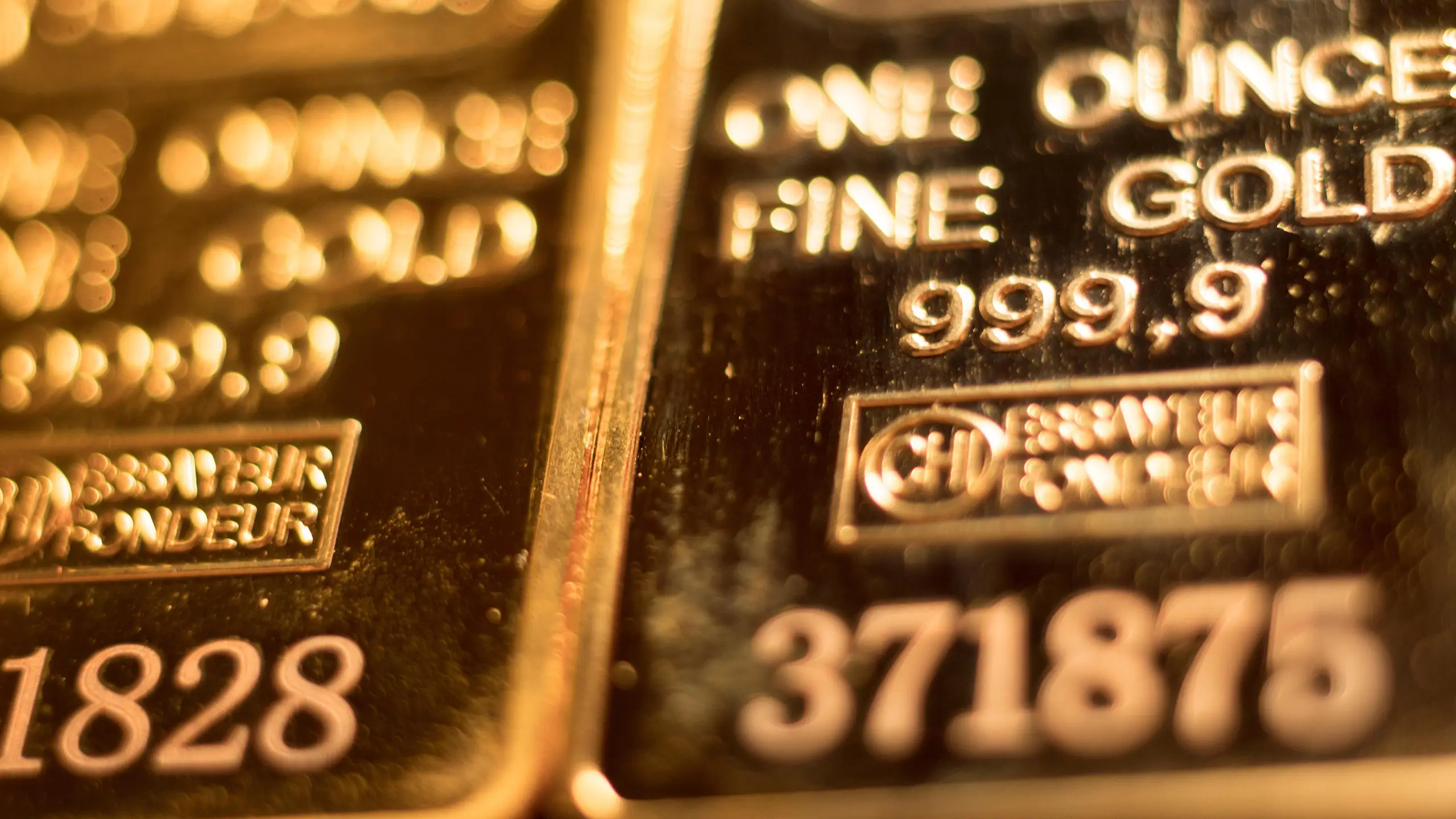
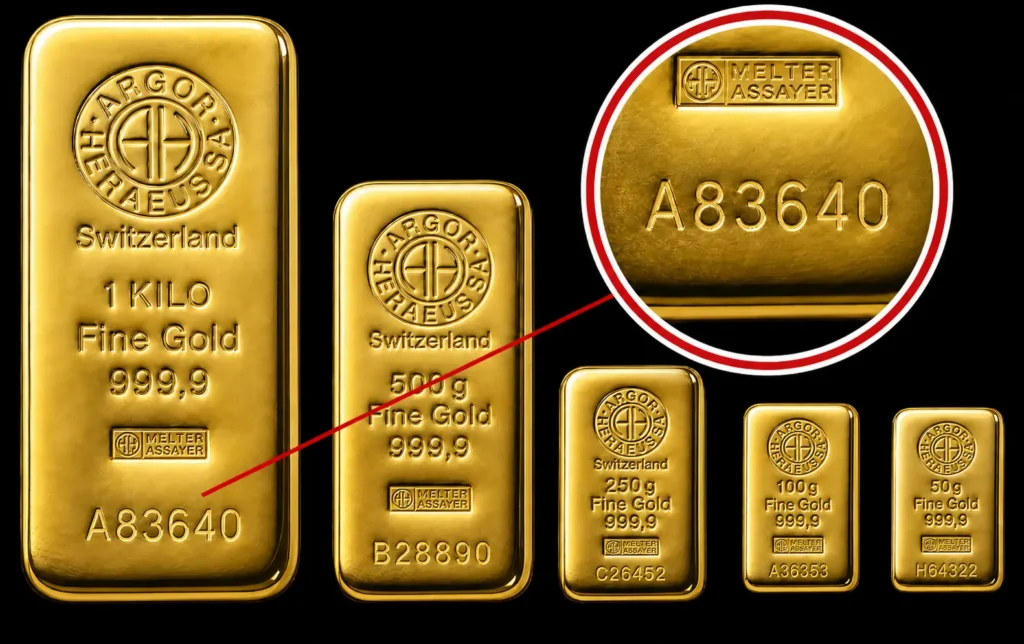
When a bar enters allocated custody, the holder receives two documents of identity. The bar itself carries a serial number stamped or laser-marked by the refiner, alongside fineness, weight, and year of casting — the Good Delivery identification set. The vault operator issues a record naming the owner and listing each bar by serial under that owner’s title. Reading the two together establishes ownership of each bar at the vault.
The pair as the unit of ownership
When a holder verifies a piece of allocated gold, two artefacts meet: the serial on the bar, and the row in the custody-side record naming the owner against that serial. The bar carries the serial because the refiner applied it before the bar left the refinery. The record carries the same serial because the vault operator wrote it under the owner’s name when the bar entered allocated storage. Holders treat the pair as a single object because no single artefact carries enough on its own.
Reading just the serial off a bar identifies the bar within the refiner’s production; reading just the row from the record names an owner against a serial. Holding both together allows the reader to confirm that the bar in front of them is the one the record names. The serial moves between the two artefacts — applied to the bar at the refinery, written into the row at the vault — and reconciliation runs from row to bar: pull the row, then find the bar with that serial.
Without a refiner-issued, non-repeating serial, the row in the record would have nothing stable to point at; without the record, the bar in the vault would have no named owner. The Good Delivery framework that defines bar-level identification supplies the first half of the pair; the vault operator’s allocated record supplies the second. Holders work with the pair because every event that touches the holding reads both at once.
Where the pair is reconciled
Five recurring events bring the pair into active reconciliation. Each tests the match at a different operational moment.
Buyback. A buyback transaction transfers specific bars. Counterparties identify each one by reading the serial off the metal and matching it against the allocation record. Pricing follows the bars actually present at the vault. A bar that fails to match a record row cannot be sold under that record; a row that fails to match a bar in the vault cannot be settled.
Audit reconciliation. On audit, the auditor walks the allocation record row by row against the physical inventory at the vault. Each row names a serial. Each serial must appear on a bar in the vault. Weight totals can balance while individual rows do not — a missing serial on the floor or a bar without a corresponding row creates a row-level break that has to be resolved before the audit closes.
Title transfer without physical movement. To transfer title without moving the metal, the vault closes the outgoing owner’s record and opens a new record for the incoming owner. The same bars stay in the vault under a different name. The transfer instruction names each bar by serial. Without the serial, no instrument names the specific bars being transferred.
Insurance claim. Filing a claim against allocated metal requires citing specific bars by serial. A generic weight-only claim has nothing in the allocation record to attach to.
Cross-border reallocation. When a holding moves between vaults under different customs regimes, the bars leave one allocation record and arrive on another. Customs and carrier documentation cite each bar by serial, weight, and refiner. For kilobar holdings, where a single transfer can involve dozens of bars, the per-serial match keeps inbound and outbound records aligned: a serial leaving origin must arrive at destination, or the reallocation halts at the receiving vault.
All five events turn on the same check: the serial on the bar has to match the serial in the row. A holder with clean reconciliation can move, sell, audit, claim against, or relocate the holding. A mismatch blocks the action until someone resolves it.