

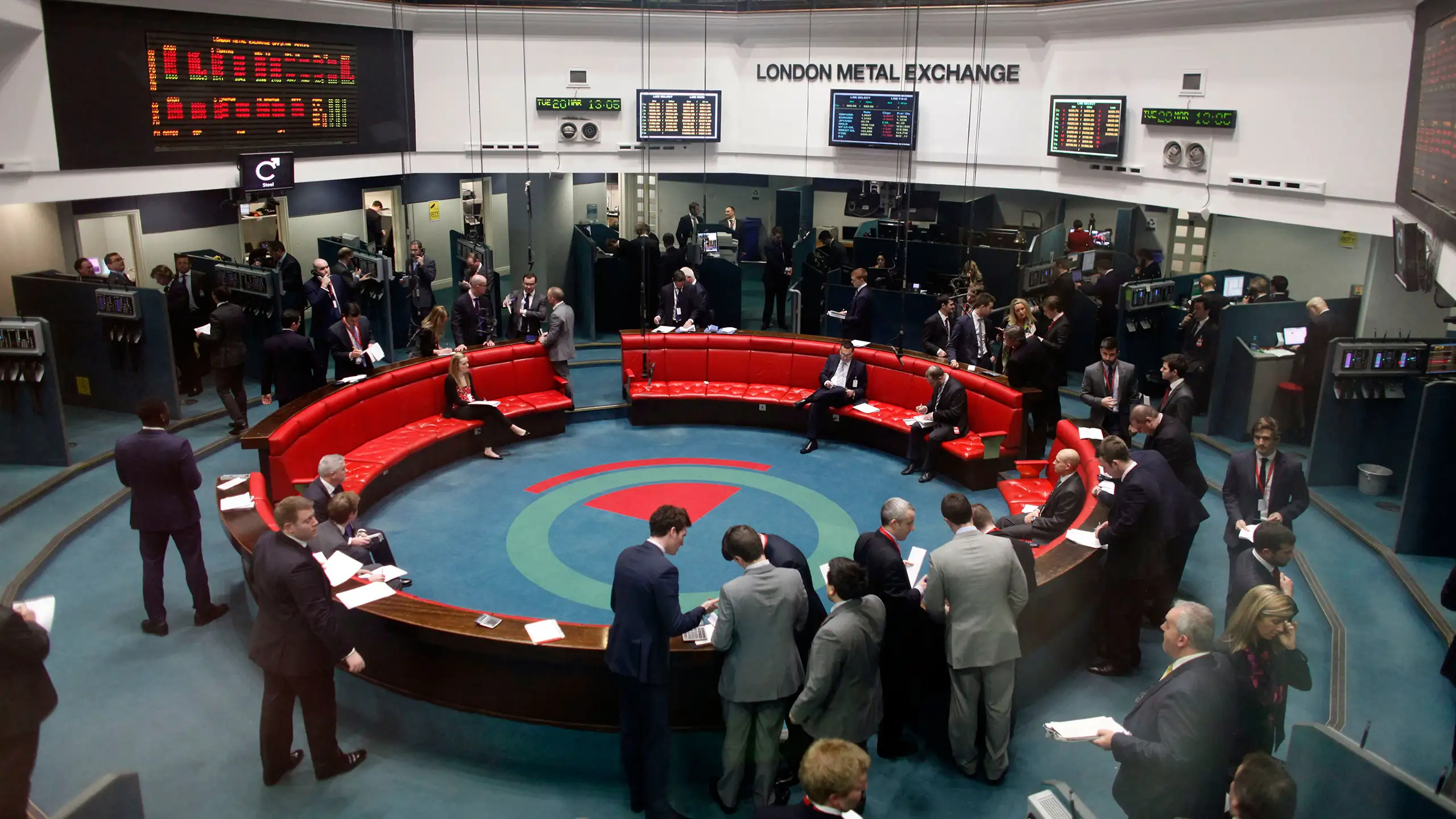
The term bullion bank surfaces early in any serious research into physical gold acquisition — attached sometimes to specific names like JP Morgan or HSBC, sometimes to wholesale market making in general, sometimes used loosely to mean any institution that “deals in gold.” The label has a precise meaning, and the distinction matters operationally: a “gold account” with a bullion bank defaults to an unallocated balance — a creditor claim on the bank’s book, not segregated metal in a vault. Bullion banks occupy one role in the wholesale market; physical-bullion counterparties operating against the same supply and custody infrastructure occupy another. What these institutions actually are, what they do day-to-day, and where physical bullion fits alongside them are the questions worth resolving before any choice of counterparty.
1. What a bullion bank actually is
A bullion bank is a financial institution authorized to quote two-way prices and clear transactions in the wholesale over-the-counter market for precious metals — primarily gold and silver, sometimes the platinum-group metals. The function is wholesale market-making: standing ready during London business hours to buy or sell at quoted bid and offer prices, in size, to other participants of equivalent standing. Trading at this layer happens between other market makers and large institutional clients; the dealing window and ticket size exclude retail.
Before settling on a counterparty route, a buyer benefits from separating bullion banks from four adjacent entities that get conflated with them in casual writing.
When a buyer wants a bar at refinery origin, the source belongs upstream of the bullion-bank market entirely. Heraeus, Argor-Heraeus, PAMP, Valcambi, Metalor, Rand Refinery, the Royal Canadian Mint, and others cast or mint bars to defined fineness and weight standards. Bullion banks trade those bars at wholesale once they exist. A request for kilobars at refinery origin routes to a refiner or accredited distributor, and the bullion-bank dealing desk is the wrong door for it.
Somebody has to hold the bars once they exist. Bank of England, Brink’s, Malca-Amit, ICBC Standard Bank, JP Morgan, and HSBC run vault infrastructure in London. Two of those names are also bullion banks — JP Morgan and HSBC — but the vault function and the market-making function operate under separate agreements and separate fee structures inside the same legal entity. Opening an account with a bullion bank places metal in that bank’s vault only where a specific custody arrangement is contracted; otherwise the bank keeps its working inventory wherever it chooses, with the customer holding a balance against it.
Coins, small bars, and storefront or e-commerce execution sit on the retail side of the market, served by retail dealers. Bullion-bank dealing operates at Good Delivery scale, with documentation requirements, counterparty checks, and minimum ticket sizes that exclude retail by design.
COMEX, TOCOM, and the Shanghai Gold Exchange handle cleared, standardized contracts — physically deliverable futures with central-counterparty clearing and margining at a clearinghouse. The bullion-bank market operates alongside them as the OTC layer: bilateral trades between named counterparties, settled in London, priced between participants in private dealing. The two feed into each other, but the structures differ — pricing and contract terms in the OTC layer arise between the trading parties themselves, and clearing, where it happens, goes through LPMCL rather than a central counterparty.
These four boundaries surround a single functional center: wholesale market-making against metal positions in London. Everything else builds on that foundation.
2. The named bullion banks: who they are today
As of May 2026, twelve institutions hold LBMA market-making status — meaning each is obliged to quote two-way bid-and-offer prices to the other market makers, in agreed minimum quantities, during London business hours. Seven of them quote across all three products — spot, forwards, and options:
- Citibank N.A.
- Deutsche Bank AG
- Goldman Sachs International
- HSBC Bank Plc
- JP Morgan Chase Bank
- Morgan Stanley & Co. International Plc
- UBS AG
Five quote prices in only one or two of those three products: BNP Paribas SA (forwards), ICBC Standard Bank (forwards, spot), Merrill Lynch International (spot, options), Standard Chartered Bank (spot, options), and Toronto-Dominion Bank (forwards).
Older third-party listings frequently show eleven names. Deutsche Bank AG was reclassified to full market-making status with effect from 20 March 2026; any source that predates that change is out of step. Citibank, formerly listed as a partial market maker, moved to full market-making years earlier and is now well established in the top tier.
The market-maker obligation has a specific operational shape. The two-way pricing service runs from 8:00 to 17:00 London time, or, on days when the New York market is closed, until the London PM gold fixing. Each quote must be honoured for an agreed minimum size — in gold, the spot minimum is 5,000 troy ounces; forwards run to 100,000 ounces up to three months and 50,000 ounces from three months to a year; options run to 50,000 ounces over tenors from one week to one year. The obligation is reciprocal: market makers quote to each other. A request from outside that perimeter — a retail buyer, an unfamiliar counterparty, a sub-wholesale ticket — draws no quote and is not the market the obligation is designed to serve. This sizing threshold, more than any other single feature, defines the floor of the wholesale bullion market and explains why a quoted “spot price” the public sees on a chart is not a price any single member of the public could transact at against one of these banks.
3. What bullion banks do day-to-day
Splitting bullion-bank activity into operational layers gives three, each settling differently. A buyer who treats them as one — assuming, for instance, that spot means immediate physical delivery — misreads what is actually being transacted at each layer.

3.1 Spot quotes and loco London settlement
In the bullion-bank market, spot refers to a transaction priced for two-business-day settlement against an unallocated balance located in London — the convention captured in the phrase loco London. The trade transfers a position on London-based books. Immediate physical delivery to a buyer’s preferred location is a different transaction entirely, and the spot quote stays silent on it.
When a buyer expects to take possession or place metal into named custody elsewhere, a spot trade at loco London is the first step rather than the whole transaction. Relocation to Zurich, Singapore, Dubai, or another centre is a separate operation — sometimes executed as a loco swap (exchanging a London position for an equivalent position in another centre, at a small differential), sometimes as physical movement against transport, insurance, and customs treatment. Each step carries its own cost and timing, and the spot quote covers none of it.
On any financial terminal or news page, the public-facing spot price derives from this same loco-London wholesale market. The number is real, but the counterparty obligation behind it is reciprocal between market makers in 5,000-ounce minimums; it is not a price at which a buyer outside that perimeter transacts. Smaller tickets and non-member counterparties pay premium over spot.
Inside the premium, several components stack — each tied to an operational step. Refinery fabrication covers the casting or minting of the bar at the required format and assay; the further the format sits from the underlying Good Delivery inventory unit (400 oz cast bars), the higher this component runs, with kilobars and minted formats carrying a heavier fabrication step than larger cast bars. Allocation covers segregation of specific bars against the holder and the recording of serial numbers and assay marks against the account. Vault placement adds intake, storage initiation, and insurance arrangement at the named jurisdiction. Cross-jurisdictional transfer carries its own transport and customs treatment when the metal is held outside loco London by design. A kilobar quoted in Singapore therefore carries a different premium over the same loco-London spot reference than a 400 oz bar held in London, even when the buyer, the refiner, and the trading counterparty are identical. Comparing two providers’ quotes therefore requires component-level itemization. Without that breakdown, two headline figures that look similar can land far apart on the actual cost line.
3.2 Forwards and options
To trade exposure to a future gold price without taking physical delivery, the bullion-bank market offers derivative products — forwards and options structured around the same loco-London position. Inside a forward, two parties commit to a purchase or sale at a future date — commonly one, three, six, or twelve months out, sometimes longer — at a price agreed today. An option works differently: the holder pays an upfront premium for the right, not the obligation, to buy or sell at a predetermined strike by an agreed expiry.
Hedging is the natural use case for these products. Mining companies hedge future production this way; refiners and fabricators manage inventory exposure; central banks position reserves for accounting periods; corporate and fund treasuries hold tactical or quantitative gold exposure. The typical counterparty across these cases is balance-sheet sophisticated, transacts in size, and treats the gold position as financial exposure. A physical buyer looking to acquire allocated bars in a named vault rarely shows up on that side of the trade. The pricing screens, the documentation packs, and the daily mark-to-market workflow attached to forwards and options are written for an active dealing desk on the buy side — a profile far removed from a buyer acquiring metal once and holding it for years.
3.3 Clearing and lease mechanics: the netting layer
Between bullion banks, net settlement passes through London Precious Metals Clearing Limited (LPMCL), an entity owned and operated by a subset of the market makers. Positions that change hands during the trading day mostly stay on the books. Physical movement is the residual — the small balance left after netting, where one participant ends the day with more metal owed than it can settle against incoming positions, and bars (or claims to specific bars) move accordingly.
Layered on top is the credit dimension. Unallocated balances function as the bank’s liability to the holder and as a working asset on the bank’s book; positions are lent and borrowed at quoted rates, generating a lease market that supplies refiners, fabricators, and trading houses with metal financing. The mechanics — clearing rules, lease-rate conventions, sub-account agreements between bullion banks and their institutional clients — operate in a specialist register and are treated separately.
Headline LBMA daily-clearing volumes therefore track book-entry transfer activity between bullion banks, while the underlying physical bar movement is orders of magnitude smaller. Treating the clearing number as a proxy for physical-market depth overstates the physical layer by a wide margin, and most of the gold-market activity captured in industry reporting is happening as credit between participants rather than as metal moving between vaults.
4. What “unallocated” and “allocated” actually mean on a bullion-bank book

Legally, the two terms describe entirely different positions. What the holder actually owns, against whom, and how the claim is recoverable — these questions matter upstream of the trading mechanics that arrived at the position.
On an unallocated balance, the bank’s books record the holder’s position in ounces of gold, treated as a liability to the holder. No specific bars are reserved against it, and no serial numbers tag the holder. The underlying metal works inside the bank’s trading and lease book as needed. From the holder’s perspective, the position is a credit claim — the bank owes the holder a quantity of gold, and the holder relies on the bank’s solvency to receive it. Should the bank fail, the holder of an unallocated balance ranks as a general unsecured creditor in the insolvency process, alongside other holders of the bank’s liabilities, with no priority claim on any specific gold.
When metal is allocated against a holder, the structure reverses. Specific bars — identified by refiner, serial number, weight, and assay — are segregated against the holder’s name and recorded on the vault operator’s books, leaving the bank’s working inventory. The holder owns title. For accounting purposes the bars are off the bank’s balance sheet; the holder owns specific metal held in custody on the holder’s behalf, with the bank acting as agent rather than as counterparty to the holding itself. In an insolvency scenario, allocated metal stays outside the bank’s estate and returns to the holder under the custody agreement.
On a conversion request from unallocated to allocated, the bank applies a fabrication or allocation fee covering the cost of sourcing specific bars at Good Delivery standard, segregating them in the vault, and recording them against the holder. Format matters here: 400 oz Good Delivery bars allocate cheaply because they are the underlying inventory format, while smaller formats (kilobars, 100 oz) require sourcing or recasting and carry a higher conversion cost. Capacity is also a real constraint — bank inventory at allocation grade is finite, and large conversions land on a schedule defined by the bank’s sourcing cycle.
Choosing between an unallocated balance and allocated metal comes down to a balance-sheet decision about counterparty exposure. The holder accepts exposure to the bank in exchange for the convenience of an unallocated position, or pays the conversion cost to remove that exposure entirely. What the holder ends up with — a creditor claim, or title to specific metal — is the substance of the decision; the convenience of how the position is recorded is the surface.
How allocated custody works at the vault layer — record-keeping, ownership evidence, periodic reporting against the bars actually held — is covered in a separate note on the custody-side perspective.
5. Physical bullion counterparties in the same market
After understanding the bullion-bank market, a buyer holding gold as a reserve position encounters a practical question: where to actually acquire the metal so that the position is allocated bars rather than a number on a bank’s book. Inside the same market infrastructure operate counterparties whose business is exactly that — arranging acquisition of identifiable bars, placing them in third-party vault custody or delivering them, and producing a documented transaction file against the metal itself.
Through the physical route, bar identity carries from origin onward. Bars come through accredited refineries at Good Delivery standard, each carrying a refiner mark, serial number, stated weight, and assay record traceable to the refining batch. What the buyer holds, in this route, is the specific bar — recorded by identity from the moment it enters the chain.
Once a bar is allocated to a buyer, the trade leaves a record against the specific metal. The transaction file ties contract and AML/KYC to payment, allocation, and the vault or delivery record on the bar — a chain by which the metal can be reconciled at any later point. Vault custody, where engaged, happens at Brink’s third-party vault facilities; delivery, where elected, goes through Brink’s logistics. Neither is on the trading counterparty’s balance sheet — the metal belongs to the holder, evidenced by the file that travels with the bar.

As an example of this model, Golden Ark Reserve — the trade name of Golden Ark General Trading (FZC) LLC, registered in Sohar Free Zone, Oman — operates exactly this way, with refinery supply through Heraeus and Argor-Heraeus and custody and logistics handled through Brink’s. The full counterparty profile holds the registry, membership, and identifier detail. Buyers come to this route for reasons that differ from the bullion-bank route’s appeal: a family office allocating gold as a reserve asset wants the bar by serial number; a corporate treasury holding metal for cross-border liquidity wants vault jurisdiction named at contract; a qualified institutional buyer planning physical delivery wants a single counterparty relationship for execution. Treasuries running active derivatives positions, funds rebalancing tactical allocations, and fabricators inside an inventory cycle continue to belong in the bullion-bank market — different need, different infrastructure inside the same market. For a buyer reaching this point — needing allocated metal, a named jurisdiction, and a counterparty file — the next decisions live around format, vault, and delivery; the physical-gold acquisition workflow is where they resolve into a contract.